A Walk Around Hampton Plantation
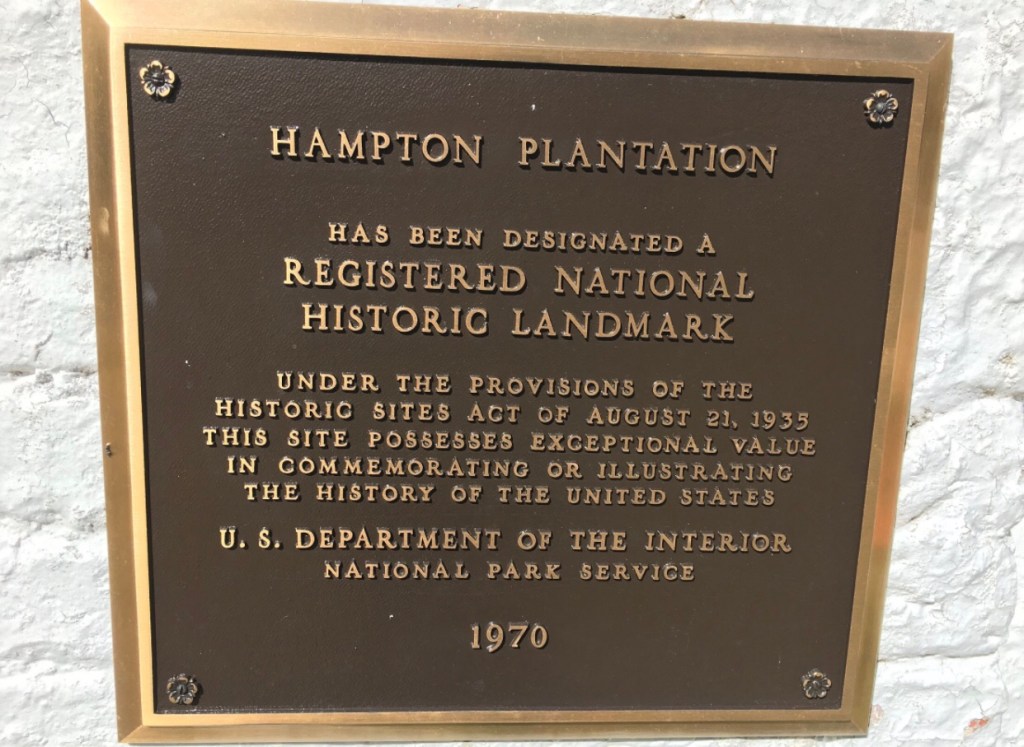
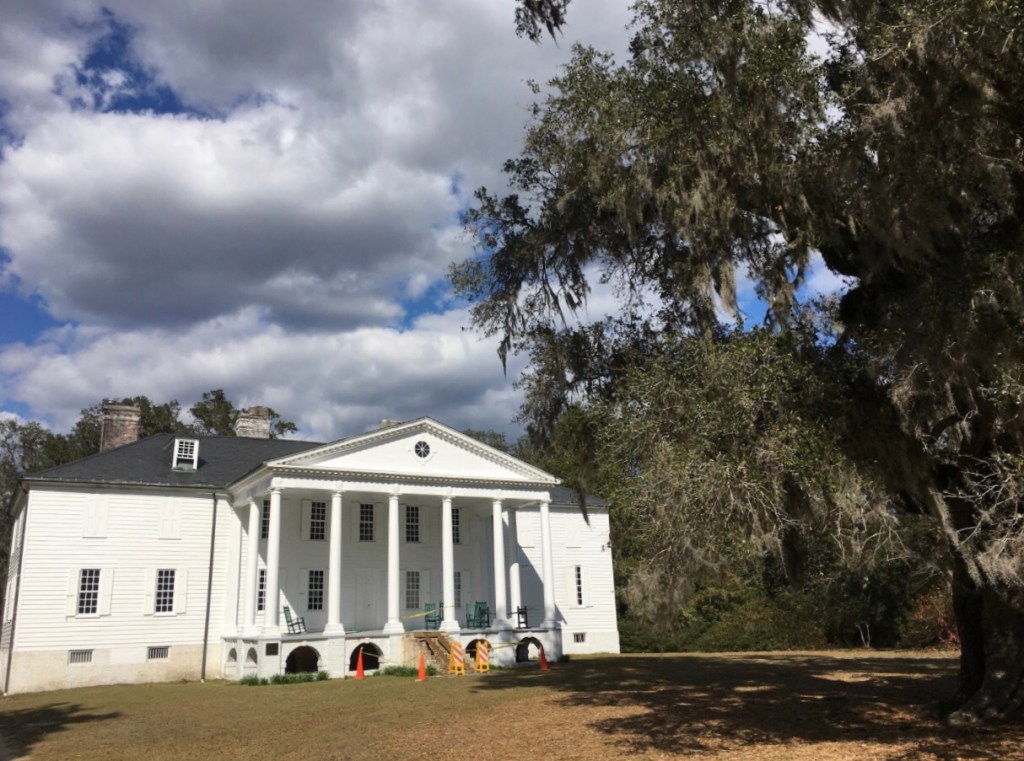
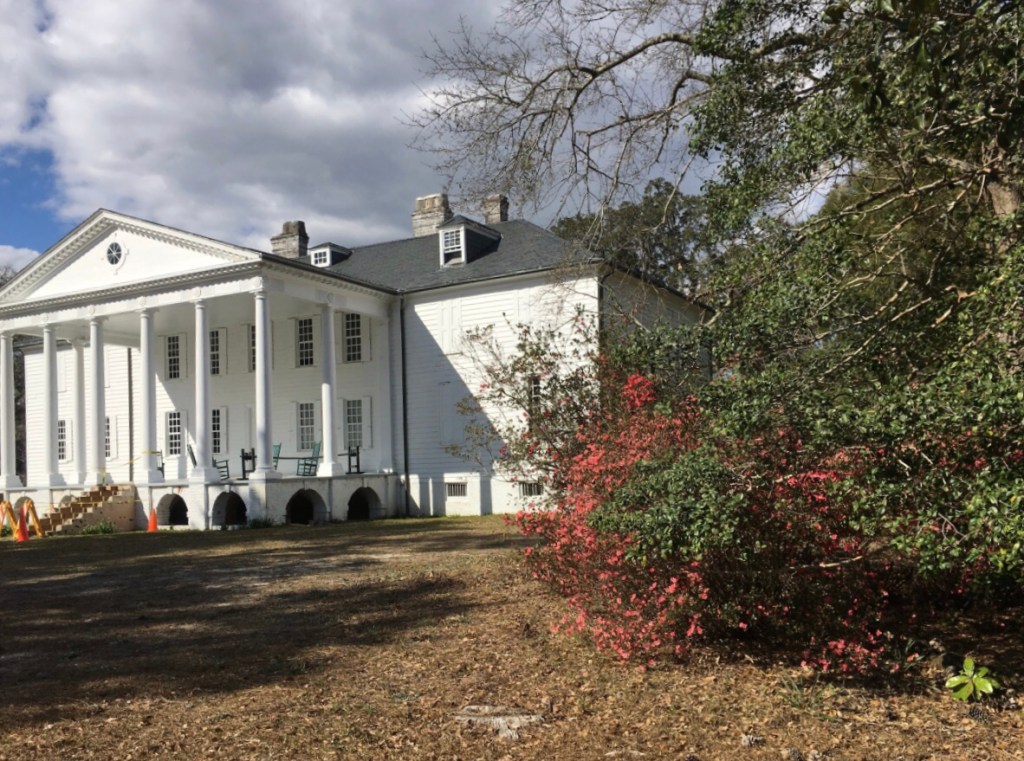
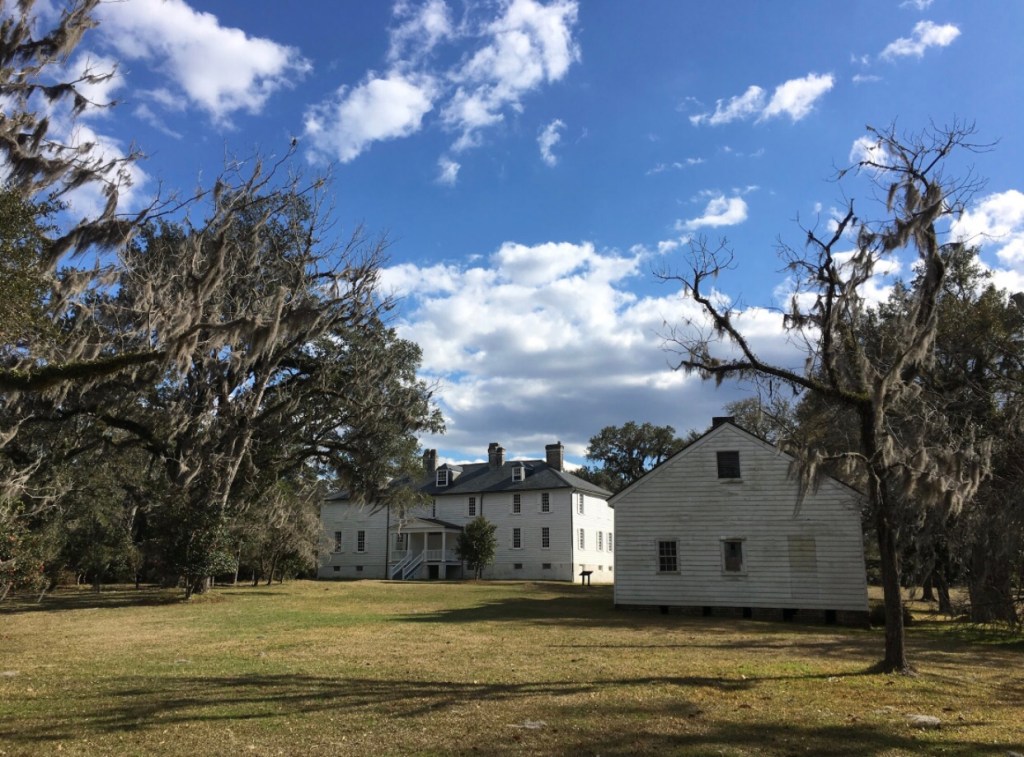
One of the most unique features of my beloved South Carolina State Parks is the fact that they are the home to three historic houses. The one that I will be focusing on today is Hampton Plantation State Historic Site in McClellanville, South Carolina. The house itself is amazing, but this blog will be about the grounds. I will go deeper into Hampton Plantation in the future once I do another house tour. In 1970, Hampton Plantation was listed as a National Historical Landmark.
First of all, if you do visit Hampton Plantation, I strongly advise to go when it is cold. If you go when the weather is warm, be prepared to be overtaken by mosquitoes. They will get in your ears, cover your back, and basically attach to any part of your body that they can suck blood from. I do not visit here when it is hot outside. I have to applaud the many men and women that have lived here and worked here over the centuries.
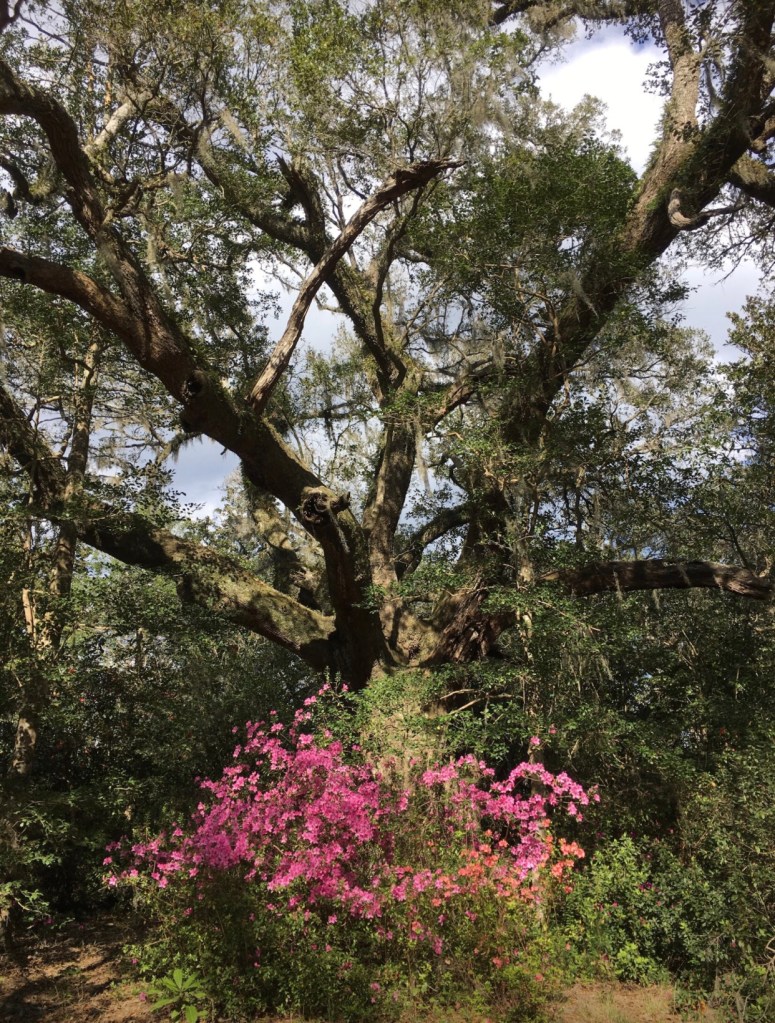
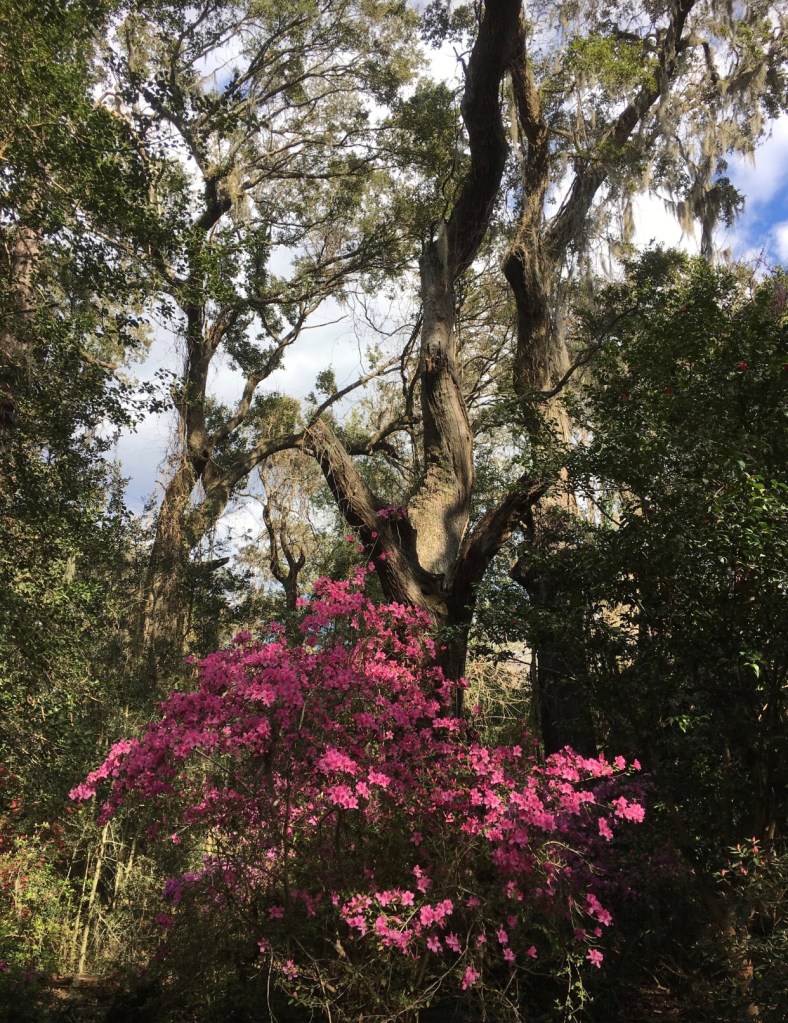
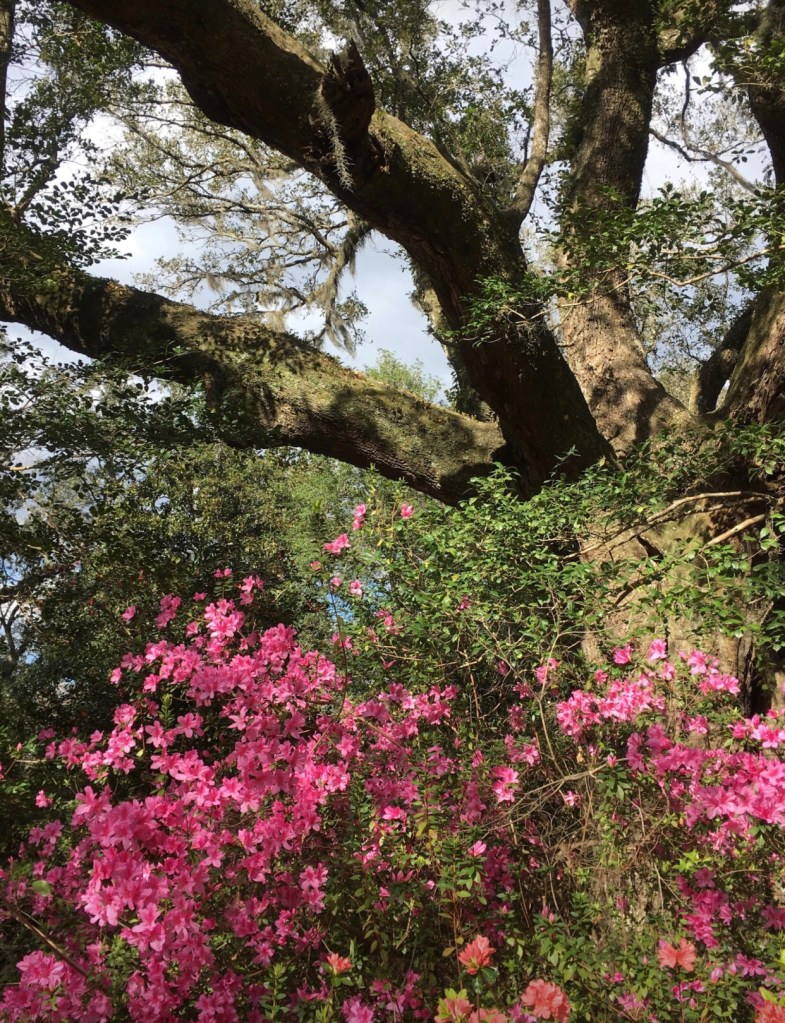
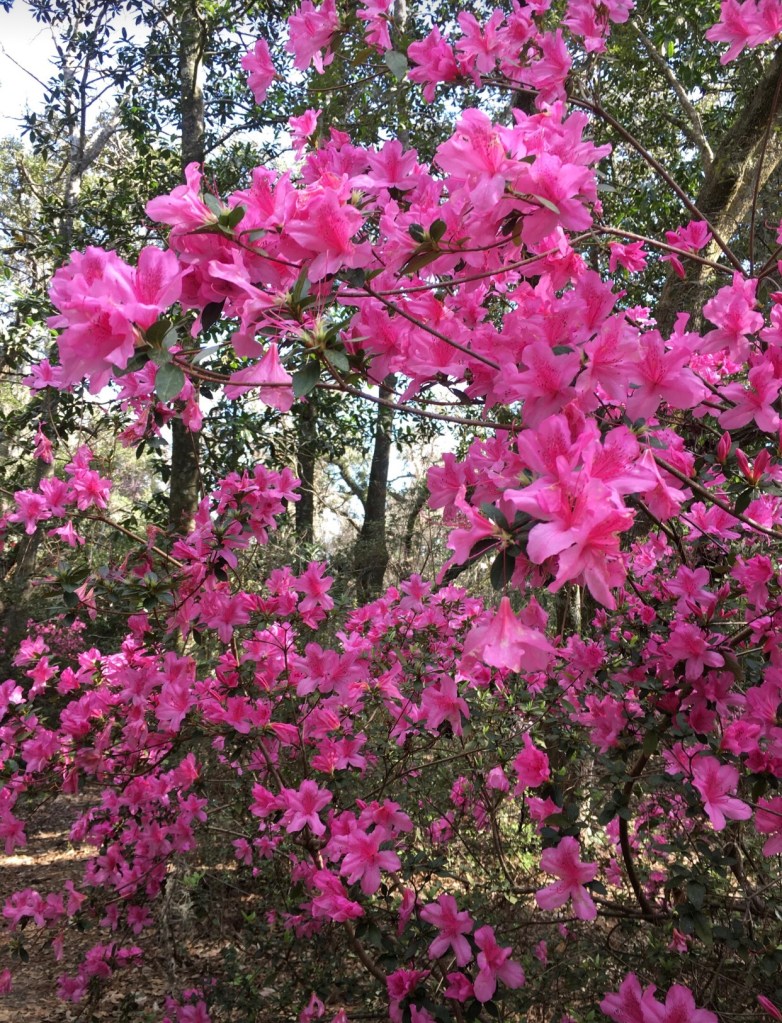
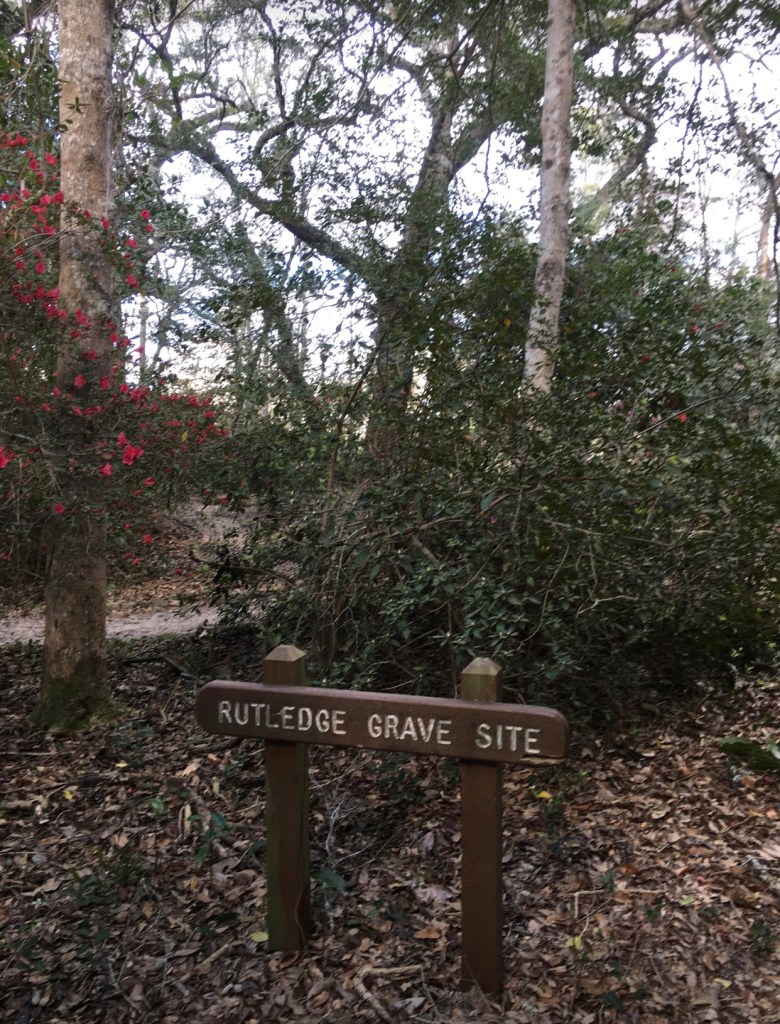
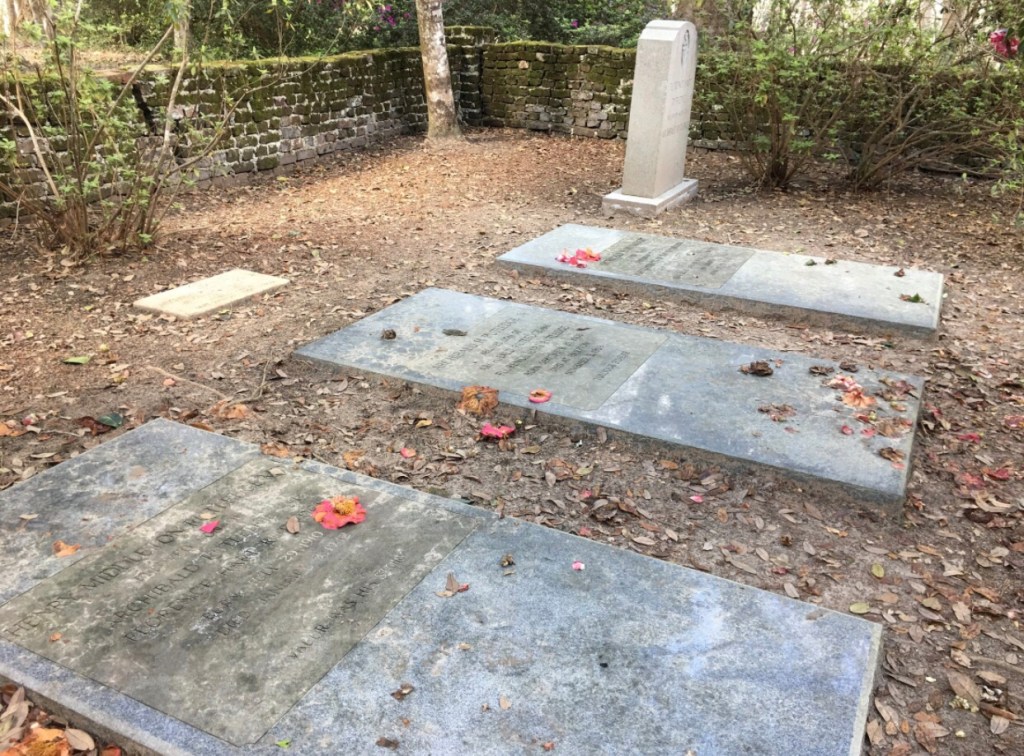
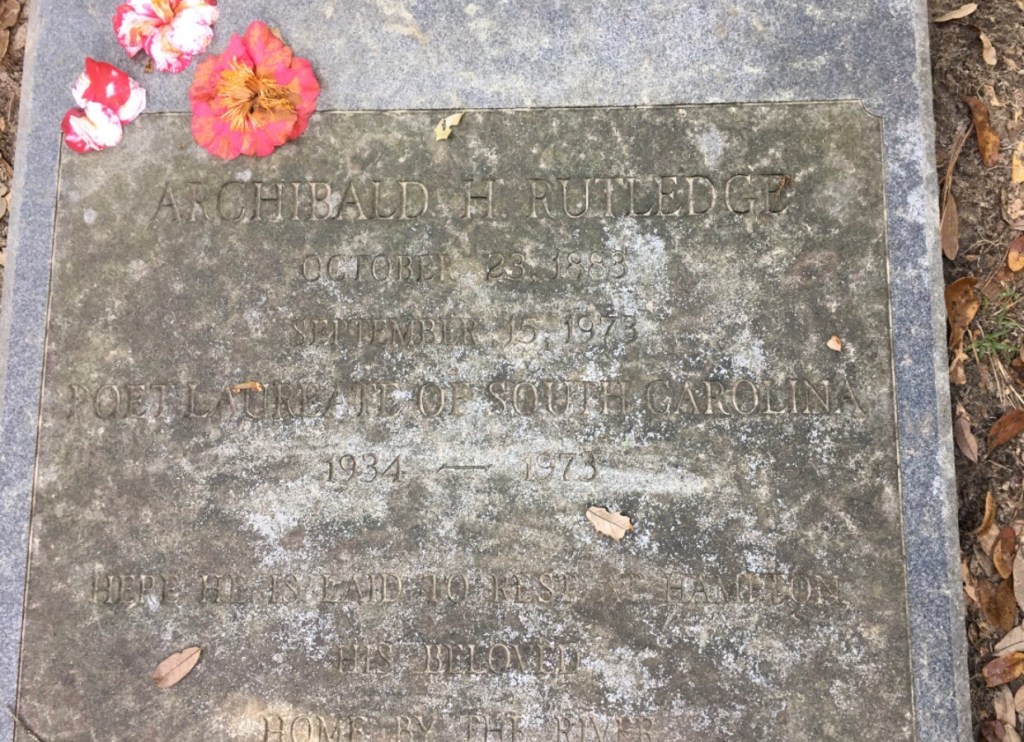
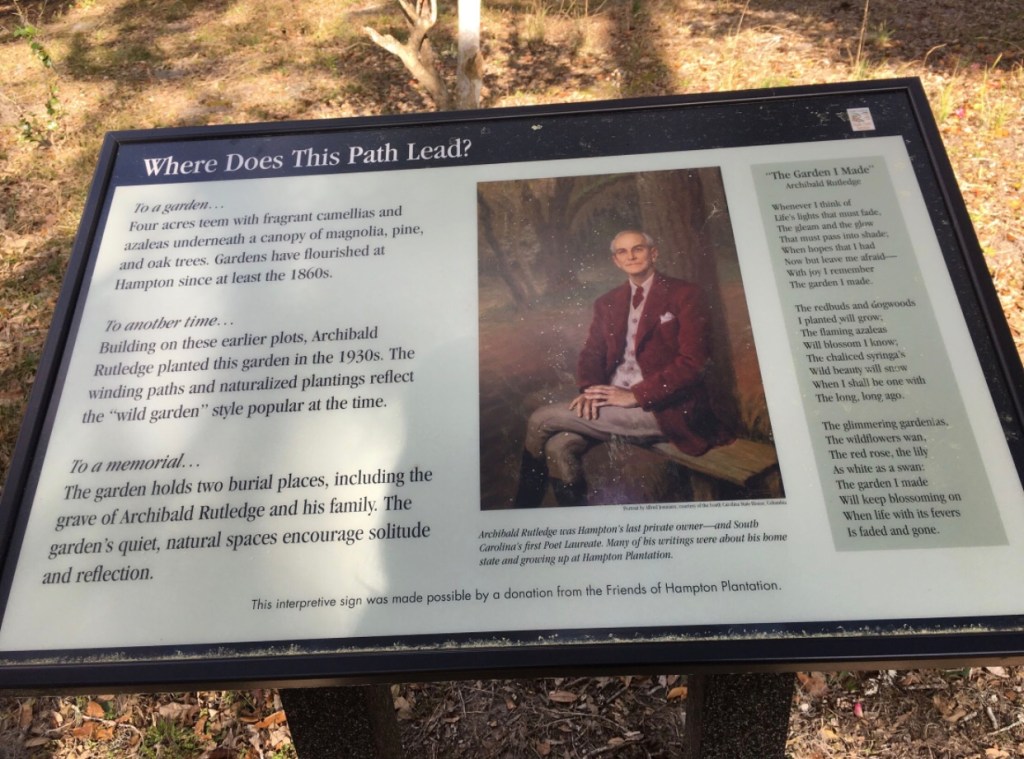
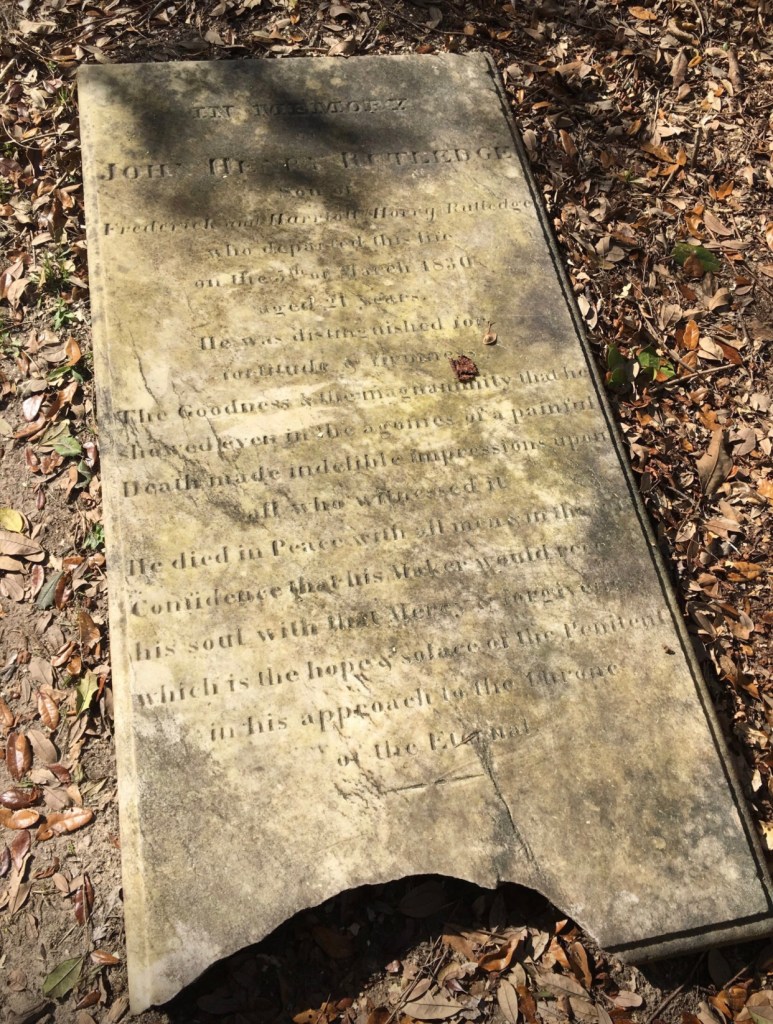
The state of South Carolina acquired 274 acres of land when they purchased it from the Rutledge family in 1971. Five generations of the Horry and Rutledge family had owned the plantation between the mid 1700’s and 1971. The last private owner of Hampton Plantation was Archibald Rutledge, who was the first South Carolina poet laureate. His poems often reflected on his days of growing up on Hampton Plantation. The beautiful camellias and azaleas that we enjoy today were planted by him in the 1930’s. A cemetery is located on the property where Archibald Rutledge and his family are buried.
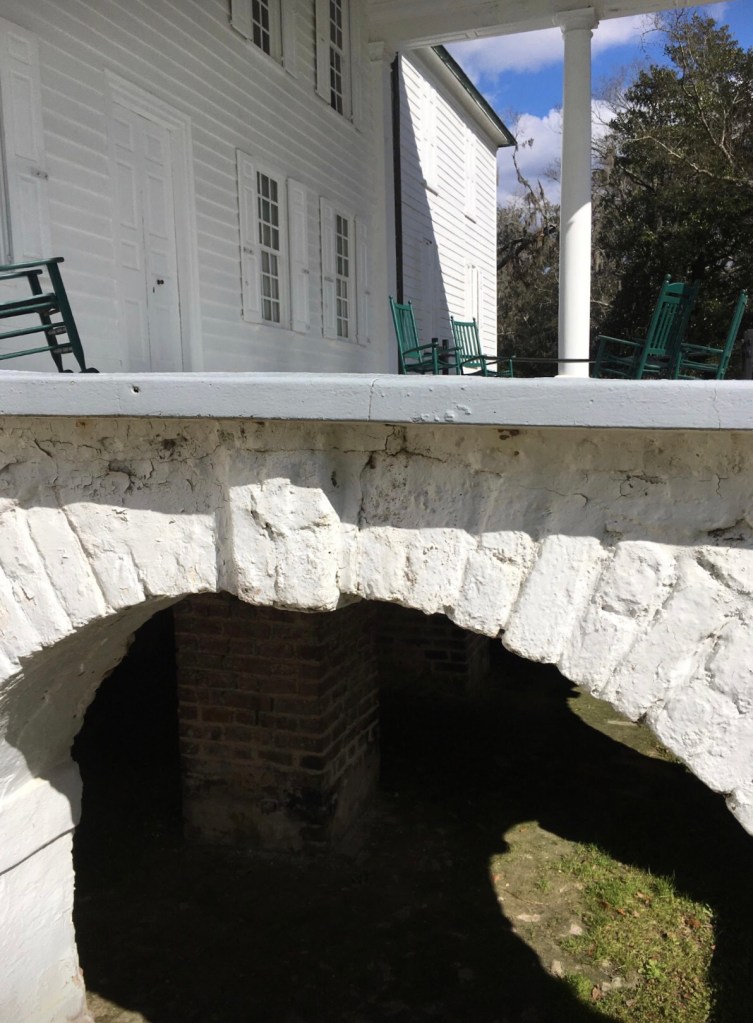
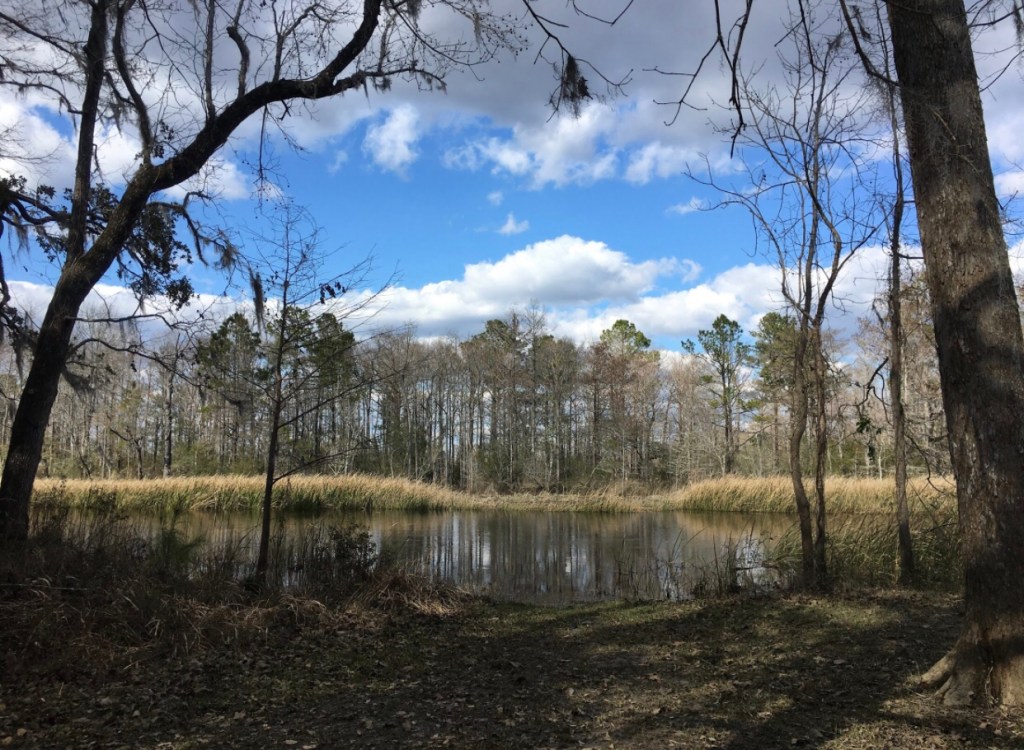
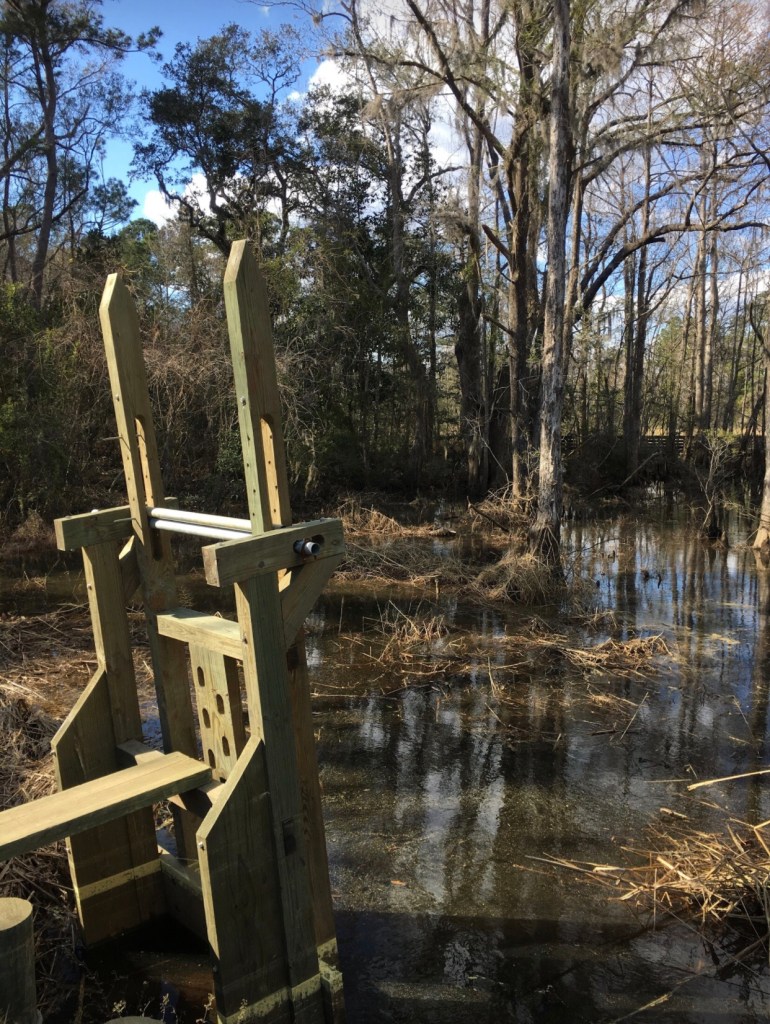
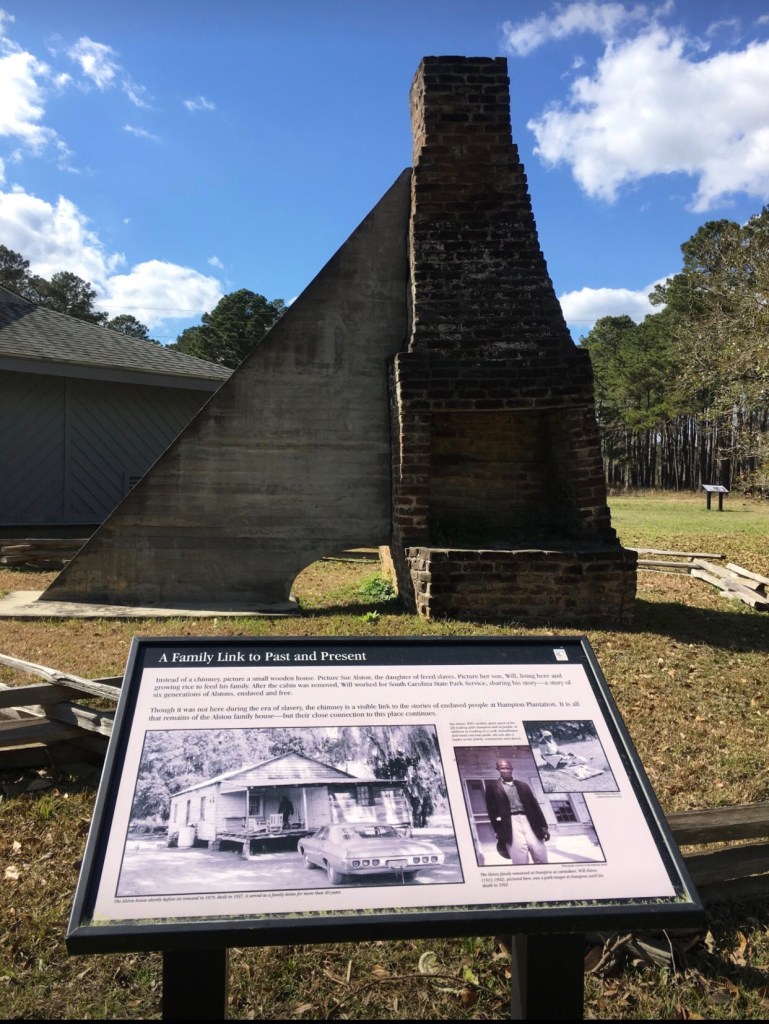
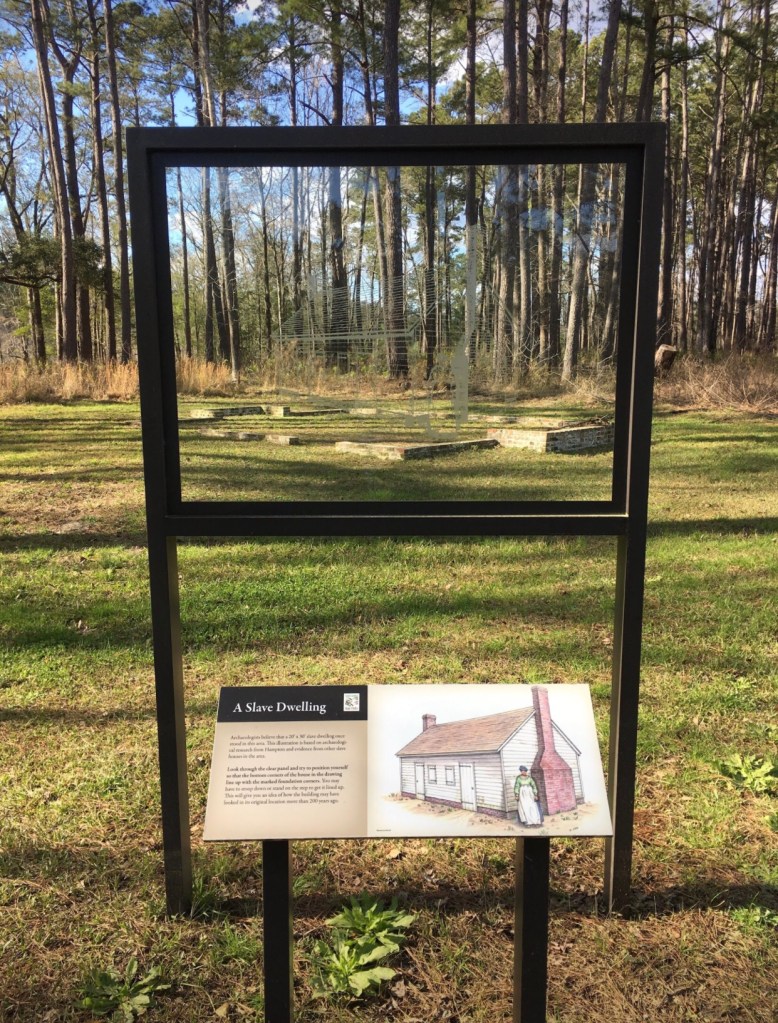
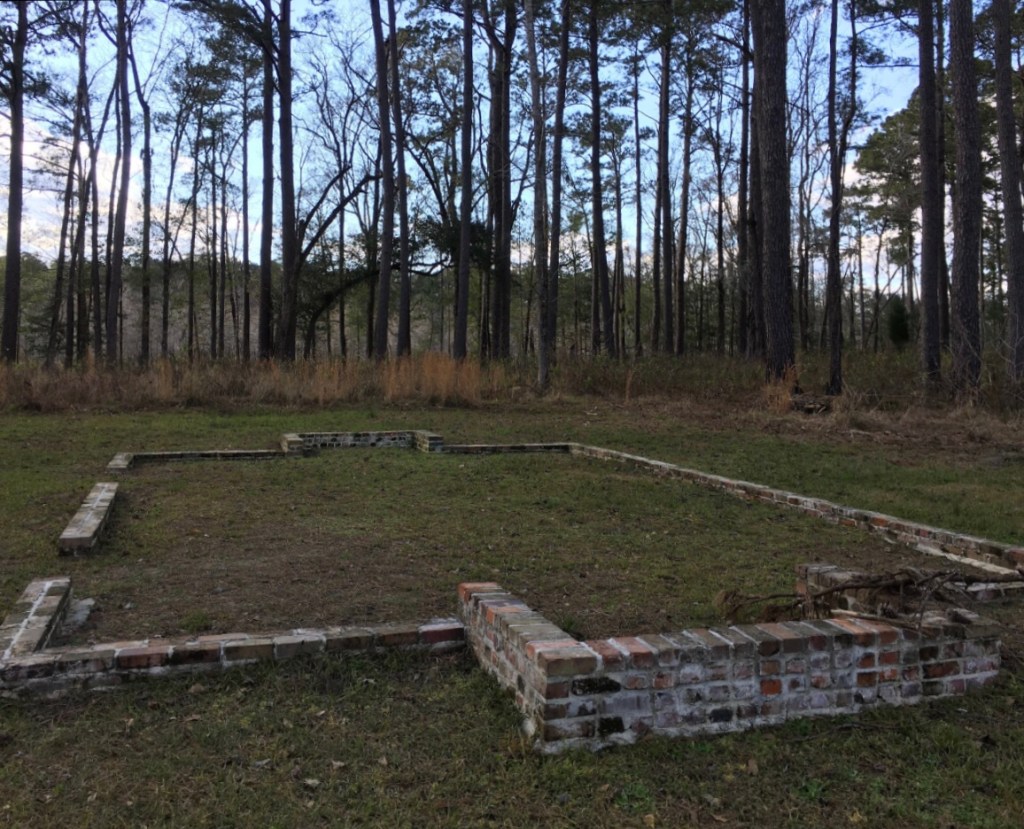
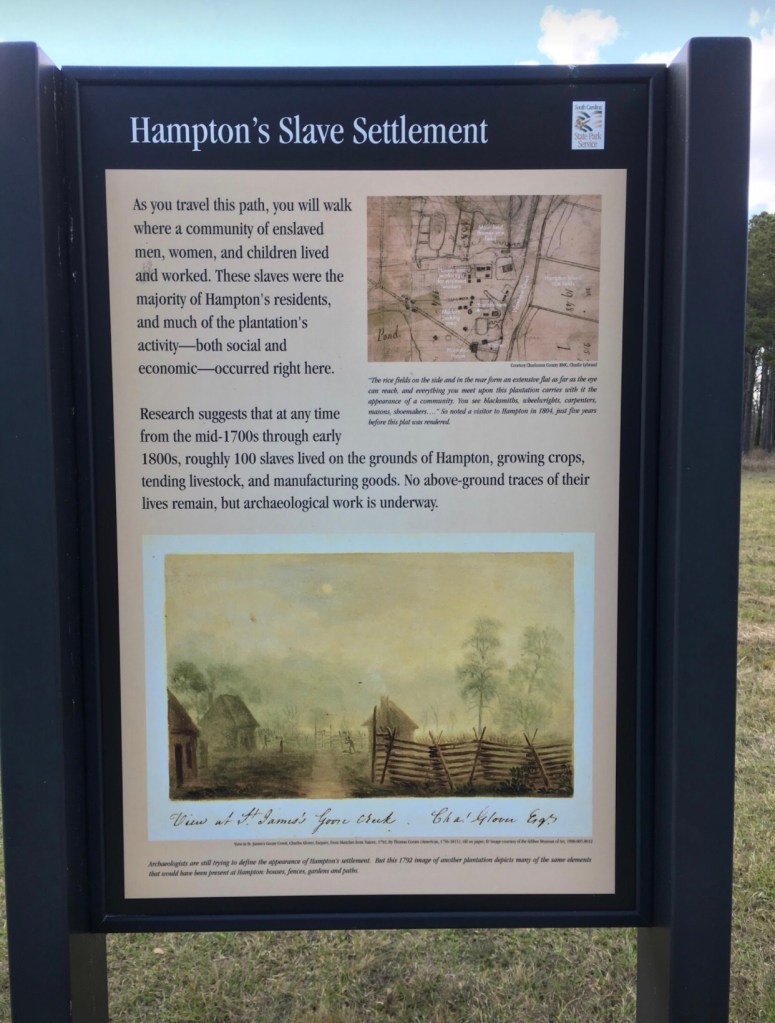
During its early days, Hampton Plantation was a working agriculture plantation. Mainly rice and indigo were farmed on the 2,000 acres that made up the plantation. You can still see the remains of the rice fields today. Only a small portion of the plantation that the many women and men that were enslaved on can be visited today. I found on one website that originally Hampton had one slave on the property in 1736, then the number went up to 314 by 1786, by 1790 the Horry family had 340 slaves, and afterwards the numbers started going down to 130 by the time the Civil War began. As you walk around the grounds, you will see the foundation of one of the houses that has been unearthed by archeologists doing digs on the property, but the parks website does state that more research will have to be done before they will know for sure that this particular area was the area where the slave cabins were located. Numerous artifacts have been unearthed that definitely show that this particular area was inhabited by people at one time.
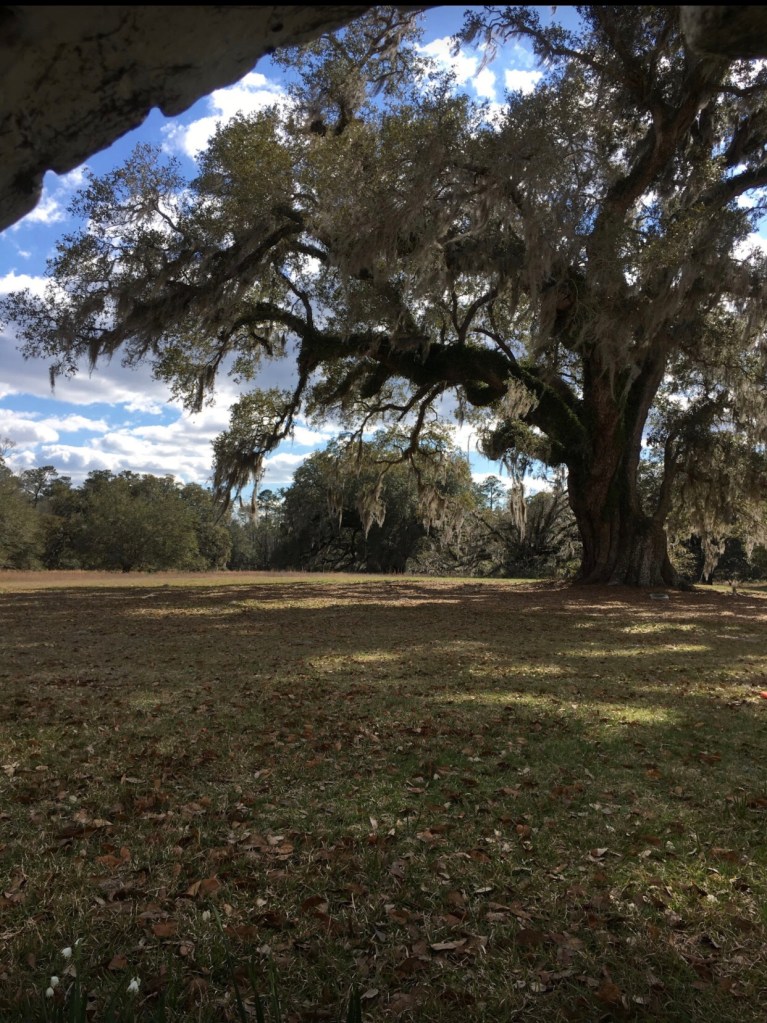
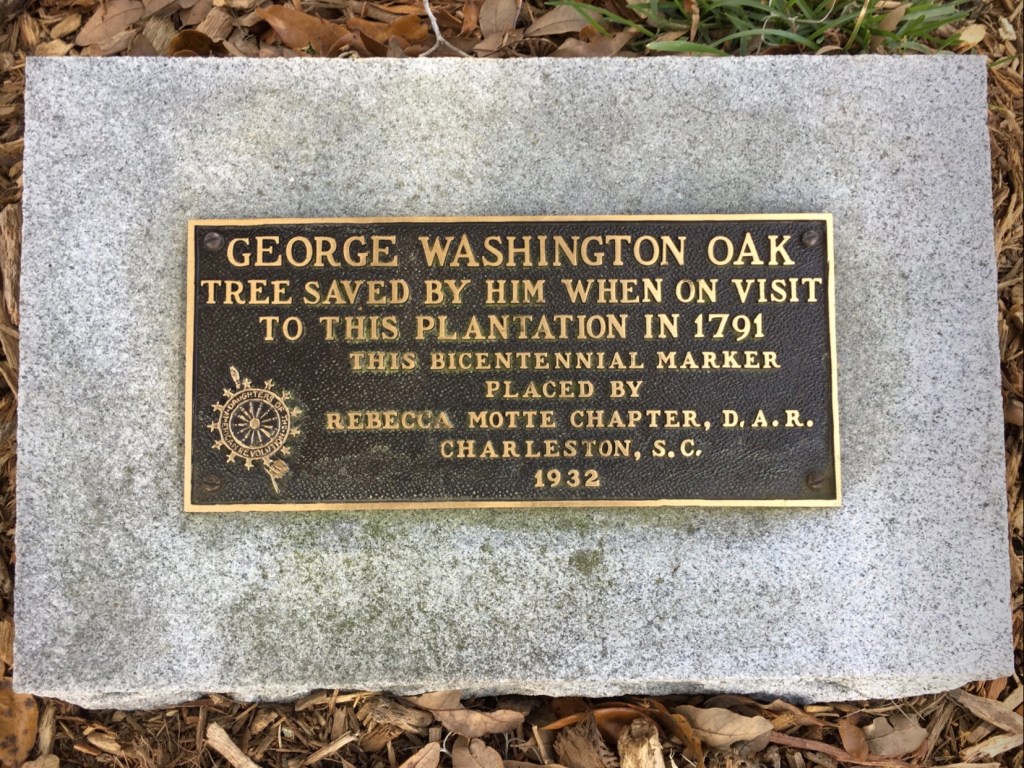
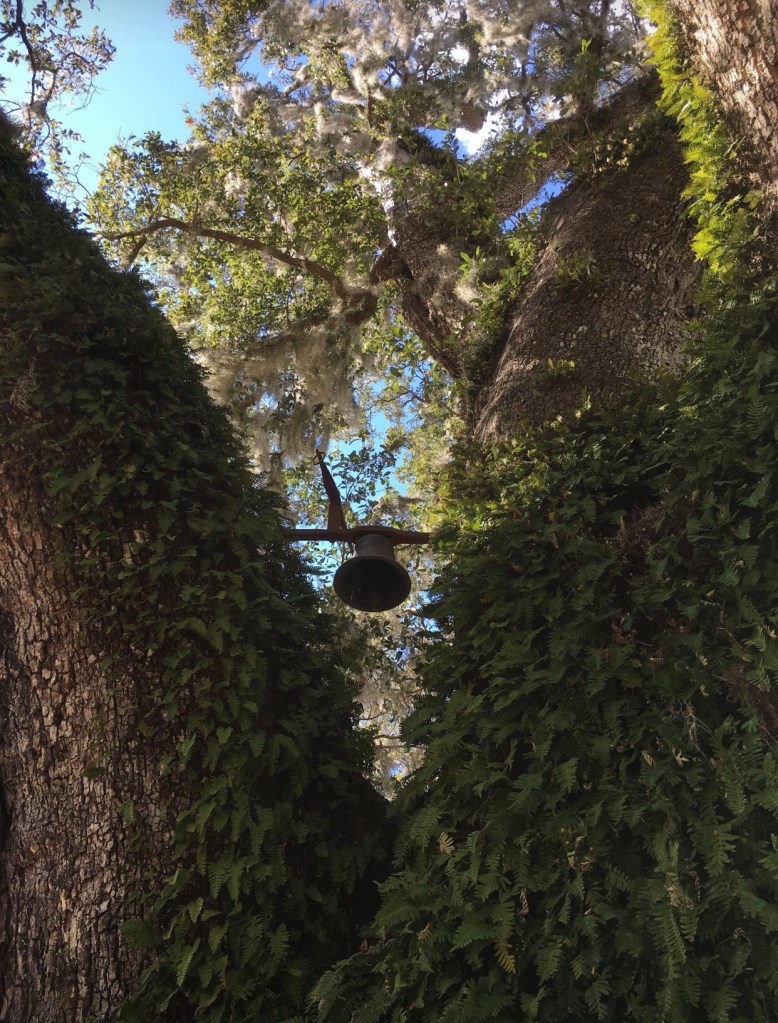
In 1791 when President George Washington was doing his Southern Tour, he stopped in at Hampton. While he was there he was asked about an oak tree. I believe the story goes that the owner asked if he liked the tree because she was wondering if it messed up the view from the portico. He replied that he liked the tree, so the tree was saved. It became known as the Washington Oak. If you look up in the tree, you will see a bell. While I am unsure as to how long the bell has been in the tree, I never noticed it until a couple of years ago, I have to wonder if that is how they used to call people to let them know that it was time to eat.
On a future blog, I will take you inside the house. It is pretty unique inside due to the fact that some of the walls are “peeled away” which lets you see how the house was built. I haven’t been inside in quite some time, so I do have to update my pictures and do some research before I post about it. Unlike the other two historic houses that the parks service is over, this one has no furniture inside.
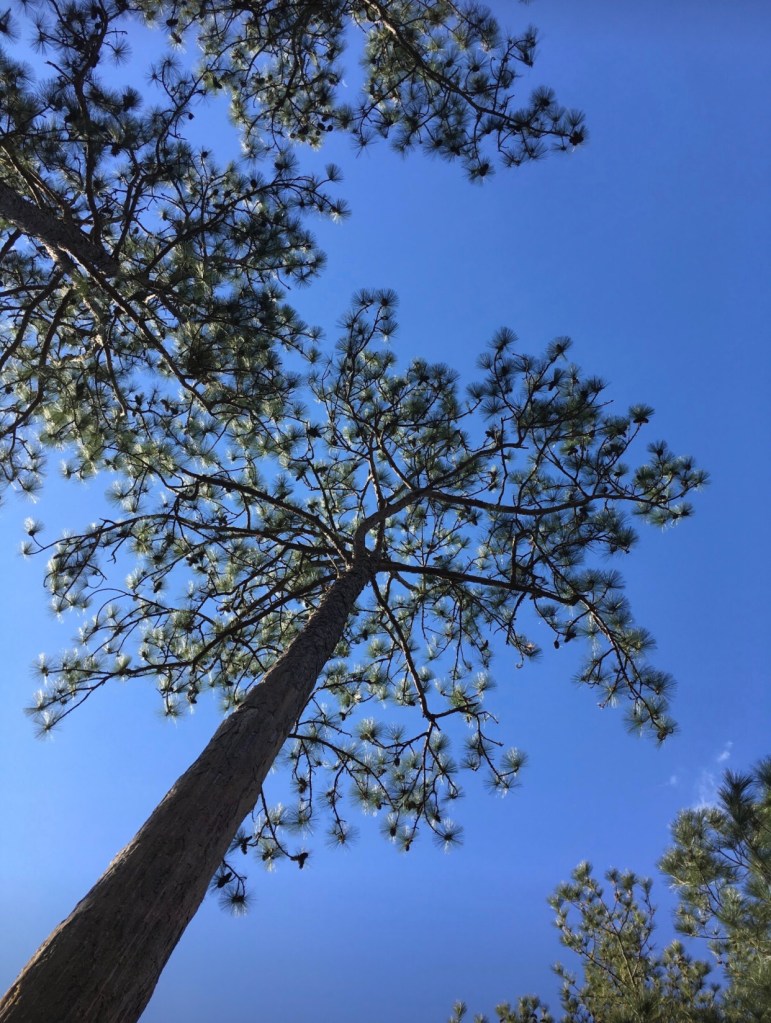
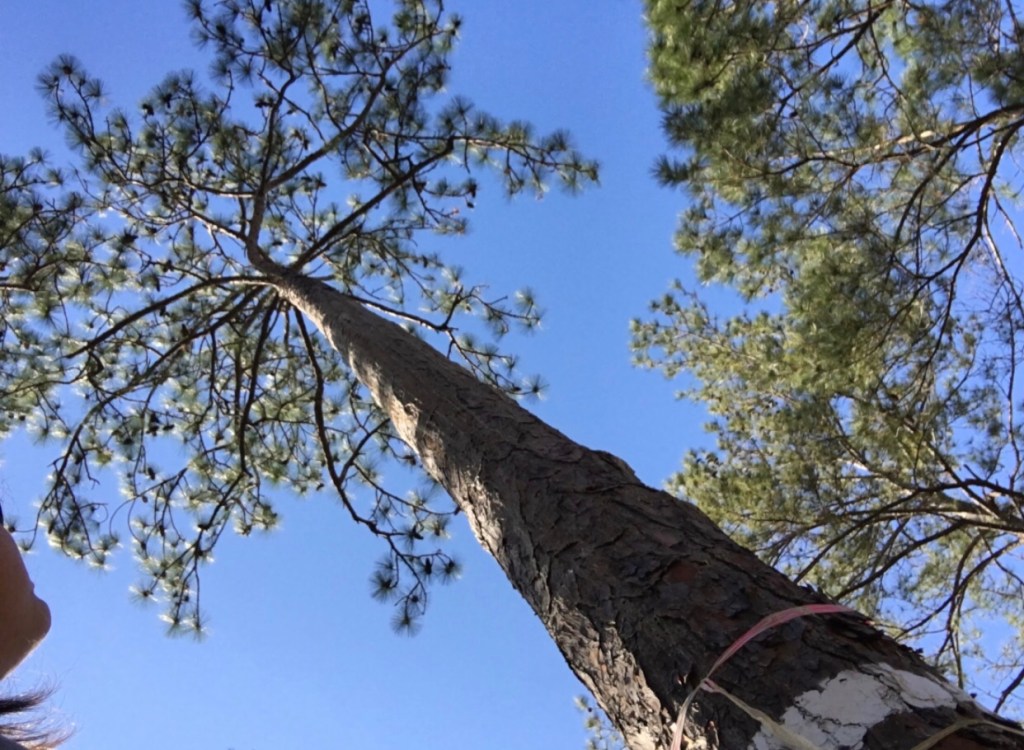
I did try to find some woodpeckers on this visit. Hampton is home to the endangered red cockaded woodpecker. I was told by a ranger to look up in the trees at the front of the property that had white rings around them to find them. No such luck, but I shall try again. It was a little windy that day, so maybe the woodpeckers were hiding from me.



Hampton Place State Historic Site is located at 1950 Rutledge Road in McClellanville, South Carolina. They open daily at 9am and close at either 5pm or 6pm. It depends on what time of year you visit to determine the closing time. It is free to tour the grounds at Hampton, but if you decide that you would like to take a house tour, a fee of $10 is required for each adult. Seniors and children receive a discounted rate. Even if you don’t tour the house, an excellent history lesson can be learned here.

 travelingthesoutheast.com