Oconee Bells
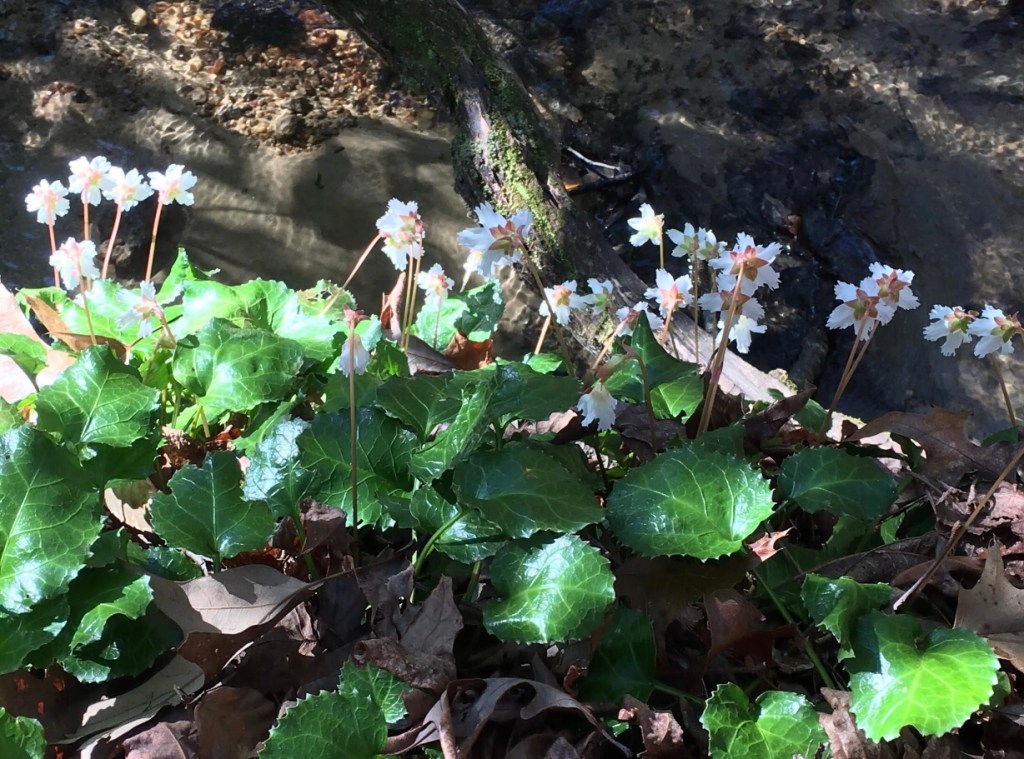
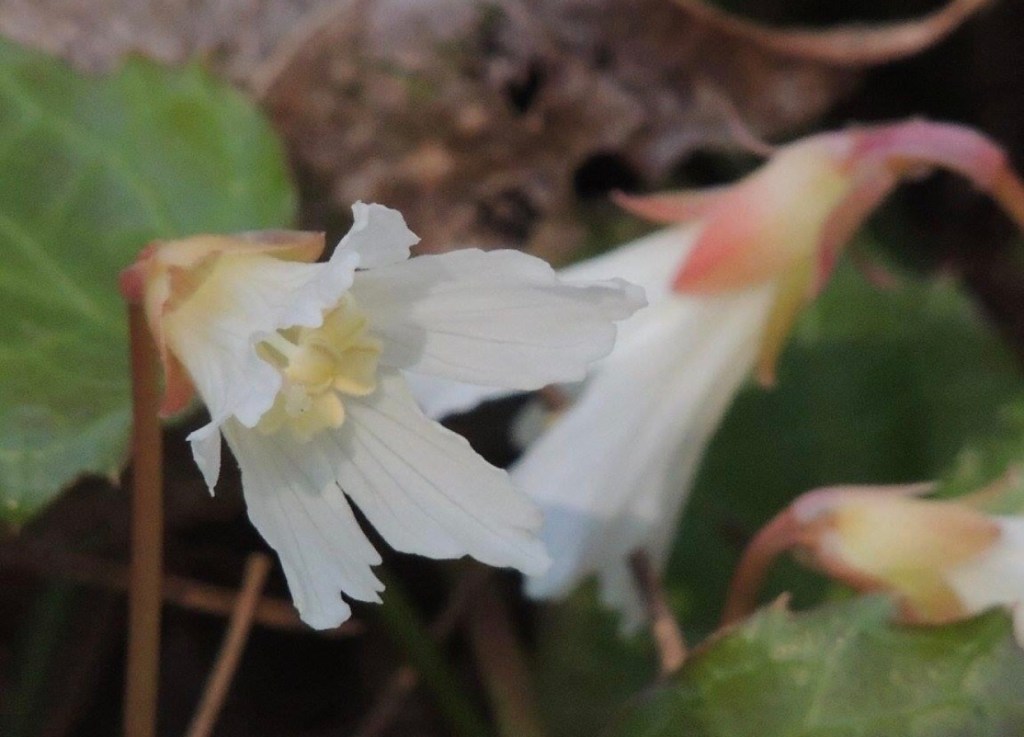
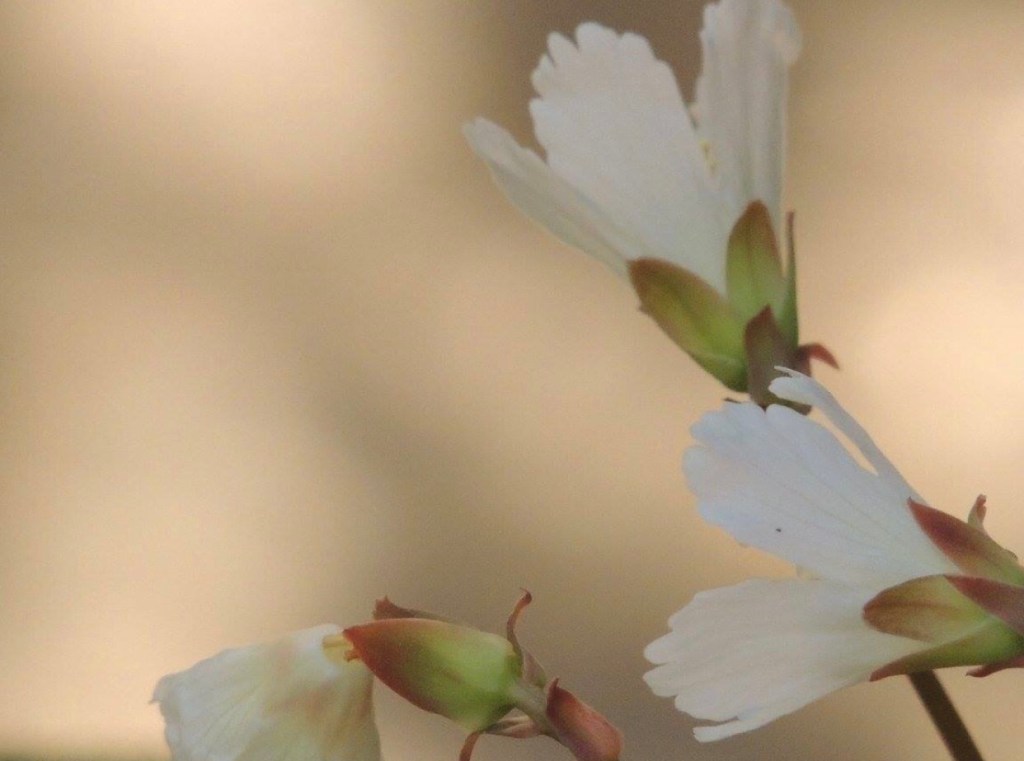
There is a state park in South Carolina that is home to one of the rarest wildflowers in the world. Devils Fork State Park is one of the only places that you can visit where you get to see the Oconee Bells in their nature habitat.
The Oconee Bells are a small little flower that were first discovered in 1788 by André Michaux. It is noted on a website that I get information from for my blogs that there has always been a disagreement about where the Oconee Bells were originally discovered. It is possible that the first collection came from either Transylvania County, North Carolina or Oconee County, South Carolina. It is noted in Michaux’s journal from 1788 that he found them in the “High Mountains of Carolina.”
In 1839, Asa Gray, an American botanist, was in Paris and saw a fragment of the plant at the Paris herbarium. He thought that it was a new genus, but it was the same one that had been discovered over 50 years earlier. Asa Gray named what he thought was a new genus, Shortia galacifolia. It was named after Charles Wilkins Short, who was from Kentucky, and the evergreen leaves are shaped like leaves in the genus Galax. Unfortunately Charles Short never got a chance to see the flower that was his namesake. For 39 years, Asa Gray continued his search of the flower that had caught his interest.
In May of 1877, the wildflowers were finally discovered for the third time. George Hyams came up on the flowers growing on the banks of the Catawba River in North Carolina. He didn’t know for sure what he had found, so finally after 18 months, he and his father sent the specimen of the flower to a botanist. That botanist got in contact with Asa Gray, and after 39 years of searching, he finally had the Oconee Bell in his hands. In 1879, he led an excursion, with the help of the Hyams family, to the location that the wildflowers had been found. Ironically, he never got to see the flower while it was in bloom in its native habitat.
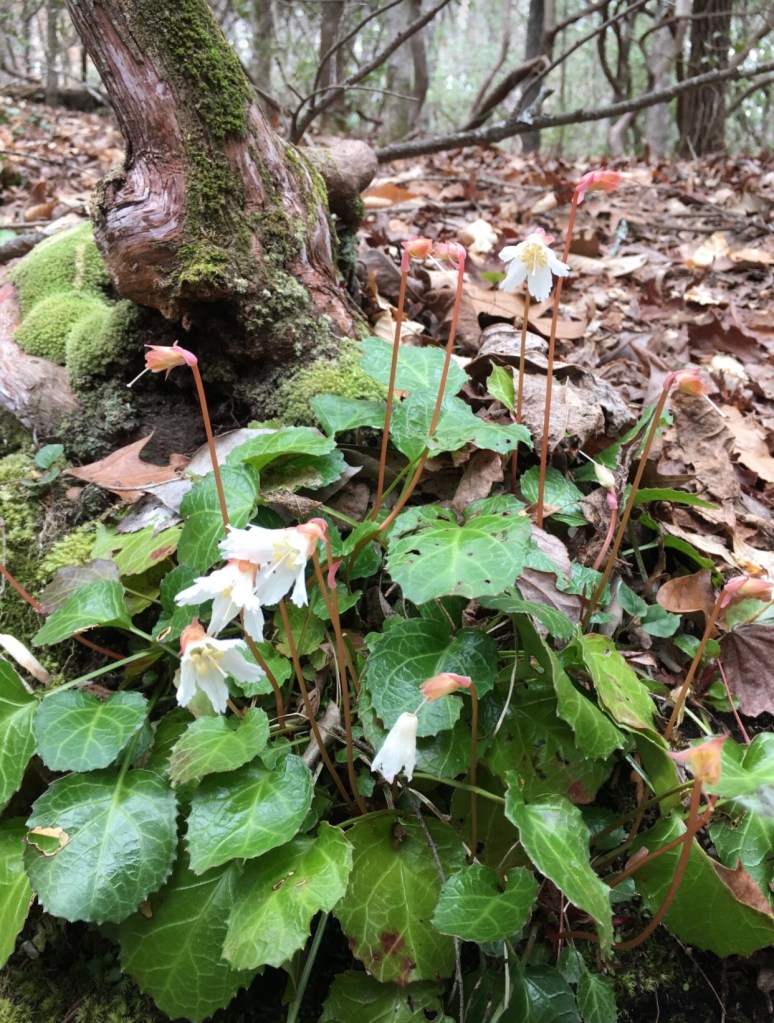
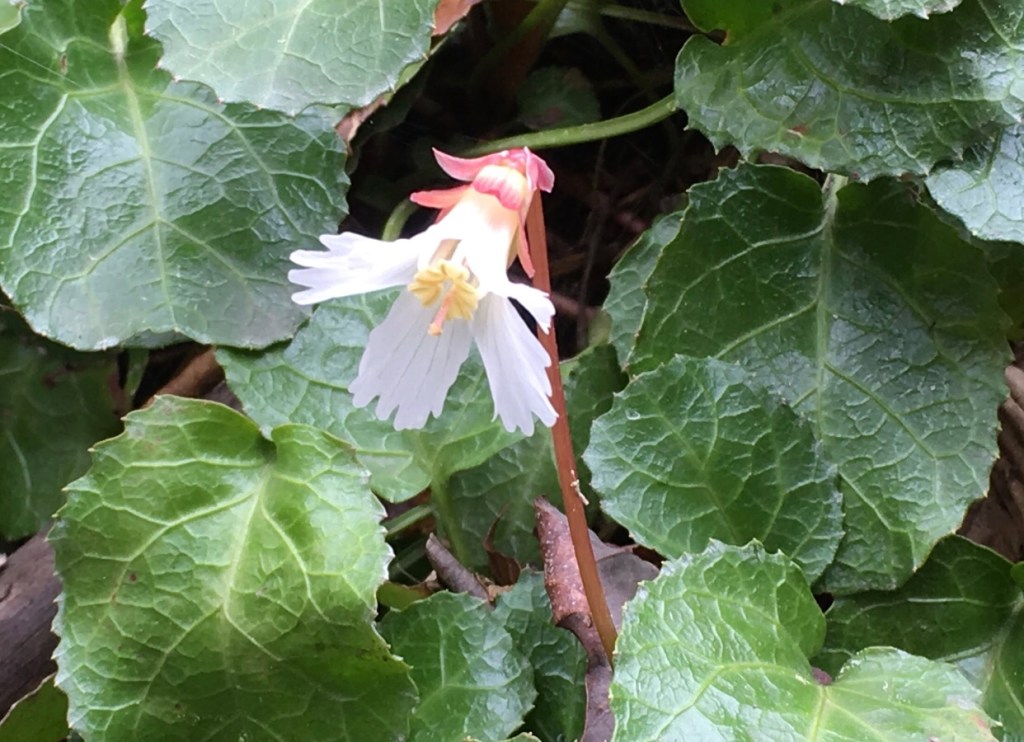
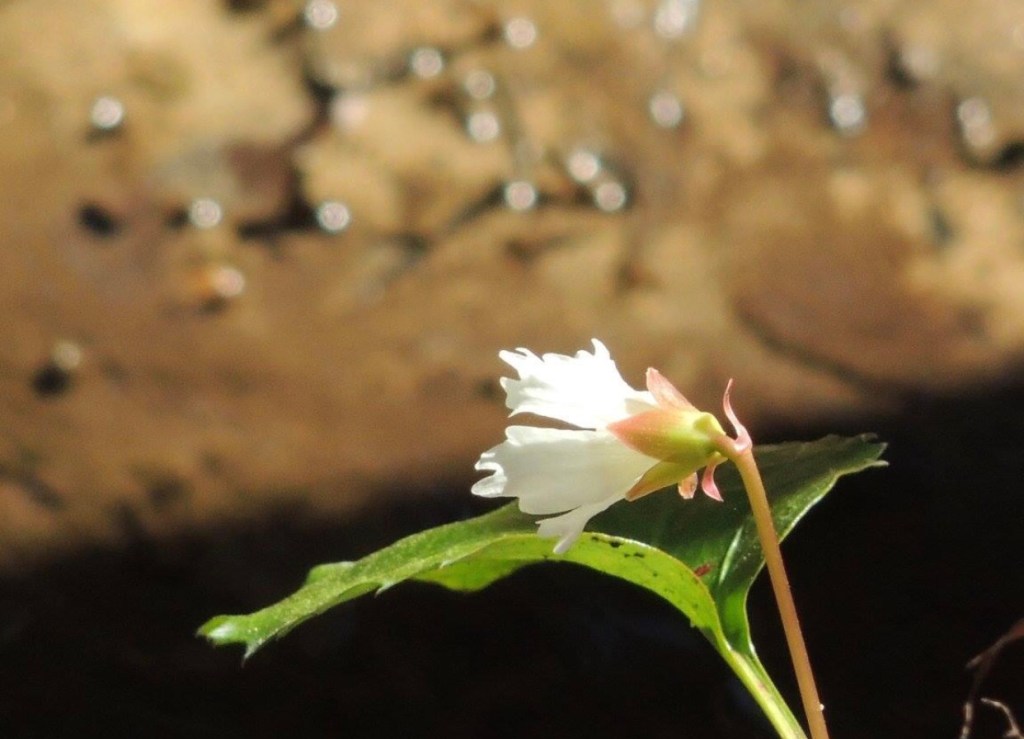
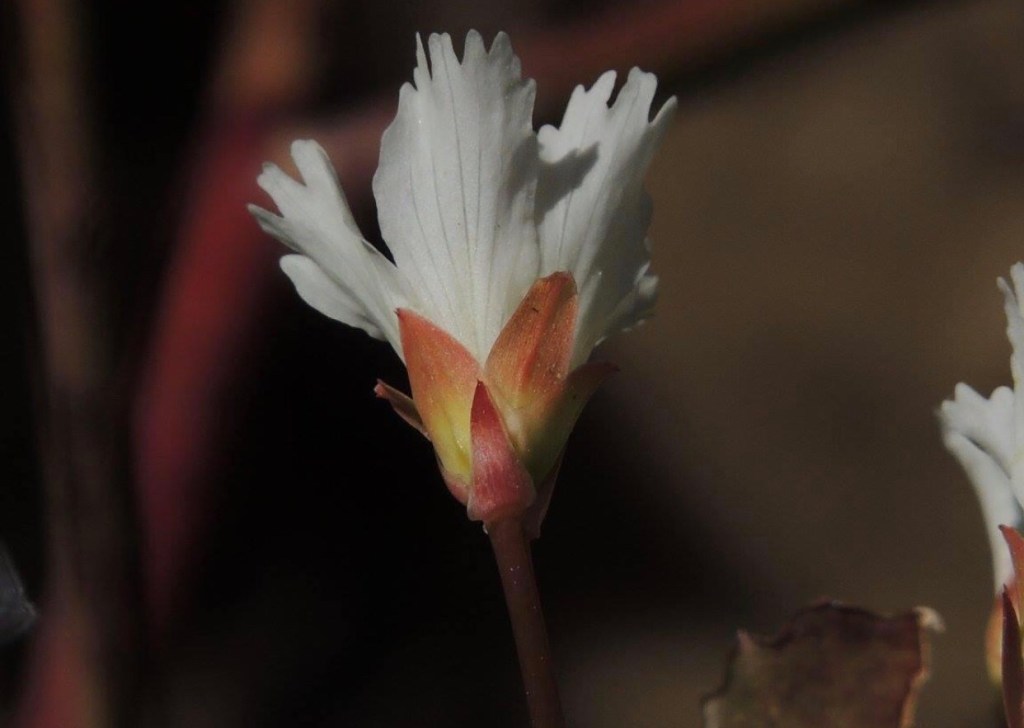
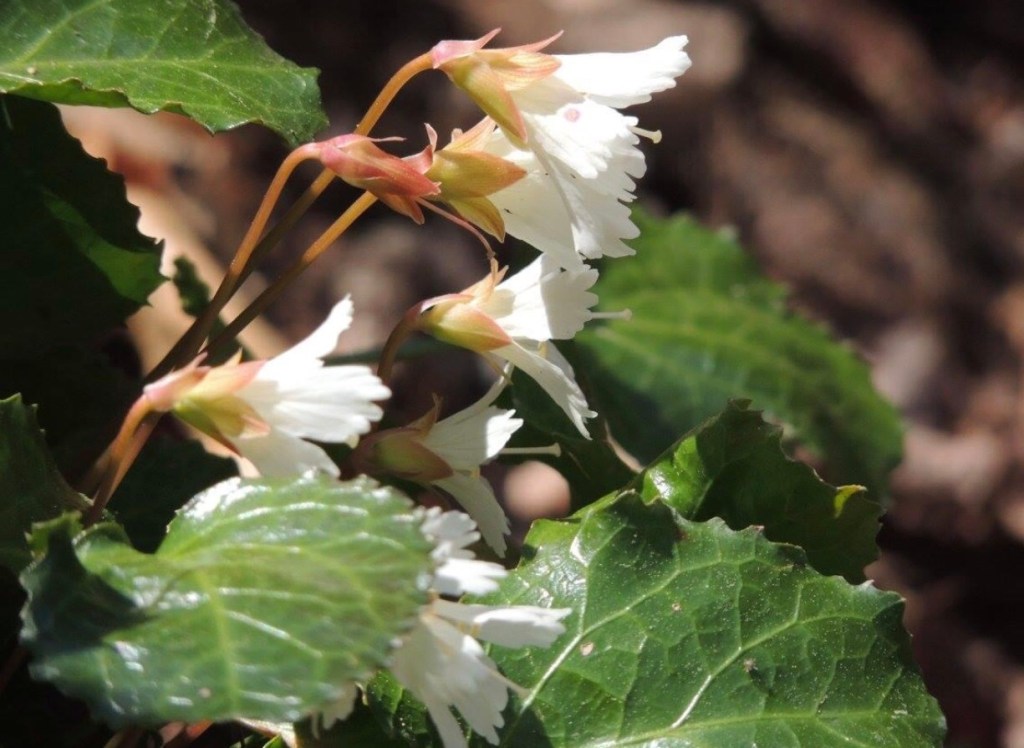
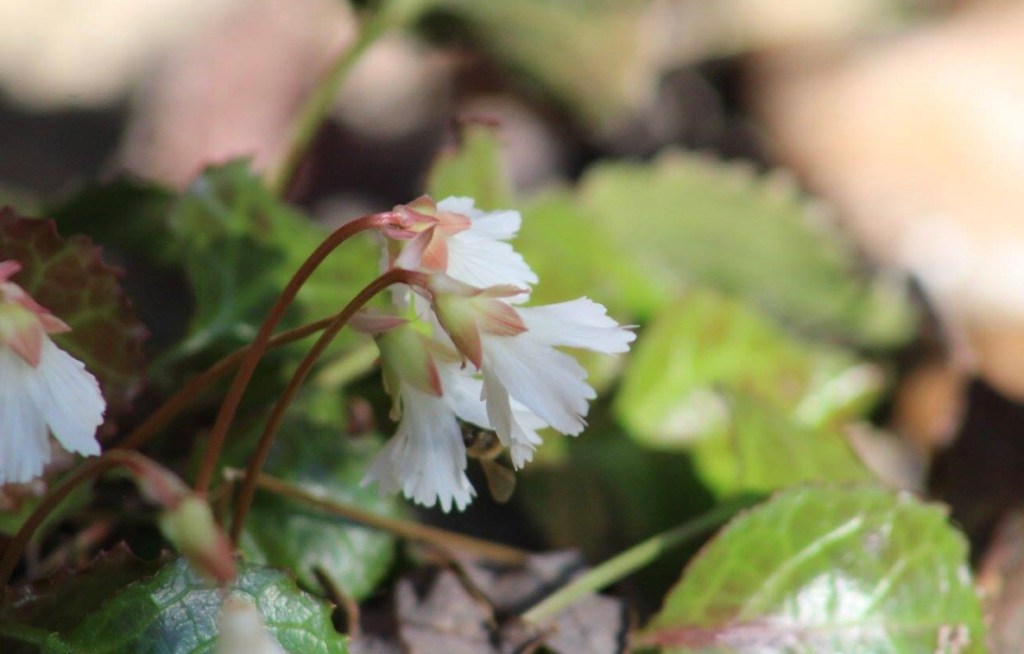
In today’s world, the little wildflowers can be viewed in bloom in mid March until late April in a few places around the Southern Appalachian mountains. They are known to bloom in Georgia, South Carolina, and North Carolina. They are starting to appear in other states, and even Japan. They like to grow in “disturbed areas,” and I have noticed that they like to grow on the edges of water. The Oconee Bells are very tiny flowers, and if you didn’t know what you were looking for, you could easily walk past them and never know.
Fortunately, the Oconee Bells grow quite well at Devils Fork State Park. You can get on the one mile loop trail, known as the Oconee Bell Trail, and admire the little flowers for yourself. At first you won’t hardly see any, but then you will come up on large amounts of them. The delicate little blooms are hard to photograph, but if you bend over or get on your knees, you can get a good look at them. Each year the park has ranger walks that let you walk with a ranger through the woods in search of the flowers. They also have a Bell Fest each year. The festival is usually held on a Saturday around the middle of March each year. I have never personally been to the festival due to having to work on Saturday’s, but I do try to visit the Oconee Bells around the same time the festival is held. I didn’t get a chance to see them this year, but next year is never too far away.



Devils Fork State Park is located at 161 Holcombe Circle in Salem, South Carolina. In addition to being home to the beautiful Oconee Bells, it is also the home of the only public access to the glorious Lake Jocassee. Lake Jocassee is at the top of my list of being the most beautiful lake in the southeast. I’ll have another blog dedicated to it in the future. Admission to Devils Fork is $8 for each adult, $5 for senior citizens, $4 for children aged 6-15, and if you have a child under the age of 5, they are admitted for free. The park is open from 7am until 9pm from spring until late fall, then 7am until 6pm the rest of the year.

 travelingthesoutheast.com
This is one of the parks on my “wish list”. Pretty flowers!
LikeLiked by 1 person